
SpaceX caught a Starship rocket with giant 'chopstick' arms. Here's what happened
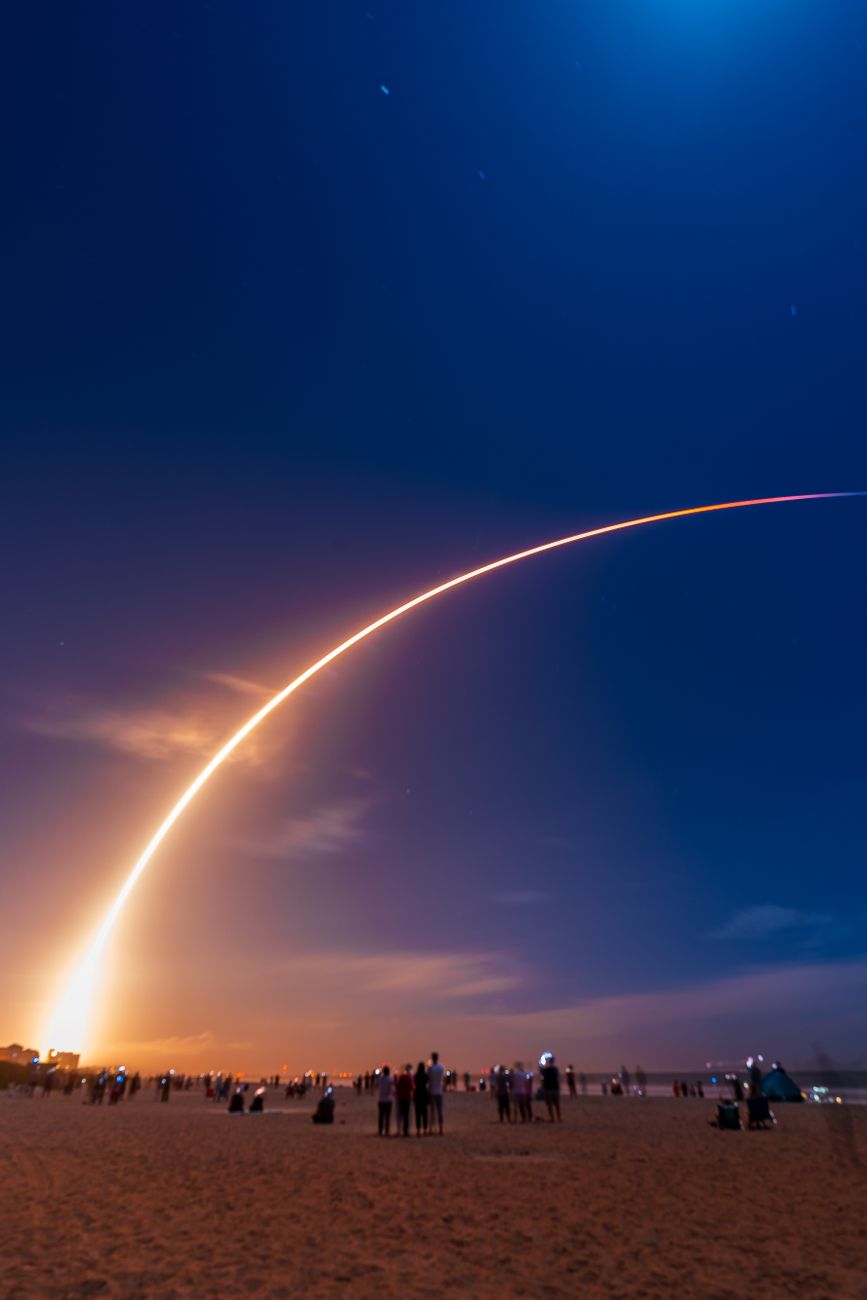
On Saturday 14 November, SpaceX caught the top half of its Starship rocket as it came back from space — the first time it has ever done so. The rocket returned to the same launch site in Texas it had left the day before and made a slow descent into the launch tower's mechanical arms, which SpaceX calls "chopsticks".
Minutes after Friday's launch, SpaceX was also bringing the bottom half, the Super Heavy booster, back to the tower for a catch. That did not happen: the booster diverted to the sea. Catching both parts on the same flight remains the next step.
What happened on Flight 15
Starship Flight 15 lifted off from SpaceX's Starbase in Texas on Friday 13 November, from Pad 2. The rocket has two main parts: the Super Heavy booster at the bottom, powered by 33 Raptor engines, and the Ship on top, which continues into space on six Raptor engines of its own.
Liftoff of Starship!
Watch the launch on SpaceX's official X account (video, posted 22:48 GMT, 13 November).
A few minutes after lift-off the two parts separated, in a step SpaceX calls hot-staging. On its official account, SpaceX said the booster was "boosting back towards Starbase for a catch". Shortly afterwards it said the booster had "diverted to an offshore splashdown in the Gulf".
SpaceX later explained that the burn that turns the booster around, known as the boostback burn, "ended early due to low fuel mass, with the root cause under investigation". The booster's guidance system then triggered an automated abort and sent it successfully to an offshore landing area. It carried out a landing burn, with the engines cutting off while it hovered over the Gulf. When those engines shut down, its flight-termination system was triggered. Recovery teams were sent to make the area safe.
The Ship continued into space and performed a short burn to enter orbit — only the second time a Starship has done so. SpaceX says it then deployed 26 Starlink V3 satellites and soon made contact with every one of them. They are already beginning to raise their orbits to join the Starlink network. After monitoring the Ship for more than 20 hours in space, the flight team prepared to bring it home.
On Saturday 14 November, about 22 and a half hours after lift-off, the Ship returned to the same launch site it had left. SpaceX had already said the pad and tower were "go for catch". Three engines lit for a landing flip and a slow descent into the tower's waiting arms, which closed to catch Starship for the first time. At 21:21 GMT, SpaceX posted:
Mechazilla catches Starship! Congratulations to the entire SpaceX team on this incredible achievement!
Watch the catch on SpaceX's official X account (video, posted 21:21 GMT, 14 November).
How the catch works
The unusual part is that the rocket is not landing on legs, as SpaceX's Falcon 9 boosters often do. There is no runway and no parachute. The launch tower itself does the catching.
SpaceX has described how a Ship catch is meant to work. As the vehicle arrives over the launch site, it lights three engines and flips itself upright. It then cuts back to two engines, manoeuvres between the tower's mechanical arms, and cuts back to one engine as it comes to a near hover. The arms close rapidly to catch it. Once the Ship registers contact with the arms, it shuts down its last engine. SpaceX also calls the tower Mechazilla. "Chopsticks" is its own nickname for the arms.
The system is designed to stop if something is not right. Before Flight 15, SpaceX said it would only send the Ship back to the tower if strict conditions were met, with back-up options to bring it down in the ocean. The same applied to the booster: when it was not in the right state for a catch, it was sent out to sea.
A short history
Catching a rocket this way is new, but the idea of reusing one is not. On 21 December 2015, SpaceX landed a Falcon 9 first stage back at its launch site — what it called the first-ever landing of an orbital-class rocket. The following year it landed one on a ship at sea, and in 2017 it flew a landed booster for a second time. Falcon boosters now routinely come back to a landing zone or a droneship.
SpaceX wants to reuse both parts of Starship, not just the booster. The first tower catch came on 13 October 2024, on Flight 5, when the Super Heavy booster was caught on the first attempt. SpaceX then caught boosters again on Flight 7, on 16 January 2025, and Flight 8, on 6 March 2025: three successful booster catches in all.
Until this flight, SpaceX had ended Ship missions with a splashdown in the ocean. Starship itself only reached orbit for the first time on 28 September 2026, on Flight 14, when it also deployed 26 Starlink V3 satellites and then came down in the Pacific. Flight 15 was the first time SpaceX tried to catch the Ship, and it succeeded.
Why catching it matters
SpaceX's case is straightforward. It says the majority of the cost of a launch comes from building the rocket, which historically has flown only once. If you can fly the same vehicle again, the cost of each launch should fall, and you can launch more often. It compares the idea to a commercial airliner, and says a rapidly reusable launch vehicle "could reduce the cost of traveling to space by a hundredfold". That is SpaceX's stated aim, not a result already measured for Starship.
Catching the rocket at the tower is meant to go a step further: the vehicle is already back at the pad, so it does not need to be fished out of the ocean and shipped home. SpaceX calls recovering an entire orbital launch system the "Holy Grail of rocketry", because it would allow "full and rapid reuse" and what it describes as an "airplane-like cadence", where a vehicle flies again quickly.
This is still a test programme, not a routine operation. The booster was not recovered on this flight, and SpaceX says the reason the boostback burn ended early is still under investigation. The company has now shown it can catch the booster, and that it can catch the Ship from orbit. It has not yet done both on the same flight.
Even so, SpaceX says reaching this milestone will help it expand the Starlink network and support future missions to the Moon. NASA selected Starship in 2021 as the lander for the Artemis III mission, according to SpaceX, but those plans depend on the rocket becoming reliable, not just spectacular.
And the satellites?
The 26 satellites released on this flight are part of Starlink, SpaceX's satellite broadband network. A similar batch went up on the first orbital flight in September. For some rural homes and businesses, satellite broadband is already a practical way to get online when a fast fibre line is not available.
Payload deploy complete. All 26 @Starlink V3 satellites are in orbit
Watch the deploy on SpaceX's official X account (video, posted 00:06 GMT, 14 November).
SpaceX says full and rapid reuse would help it expand that network. That is a long-term possibility, not a promise, and not a reason to change your office broadband tomorrow. It is simply why a test flight in Texas can have a quiet link to everyday connectivity.
It's a striking piece of engineering. If you ever want a plain-English chat about connectivity, we're happy to have a chat.
Sources
All sources below are from SpaceX. Times are GMT.
SpaceX, Starship Flight 15 mission page
SpaceX, Returning Starship to the Launch Site, 7 November 2026
@SpaceX official posts (all times GMT):
13 November, 22:48 — Liftoff of Starship! (video)
13 November, 22:51 — hot-staging; Super Heavy boosting back towards Starbase for a catch
13 November, 22:55 — Super Heavy diverted to an offshore splashdown in the Gulf
13 November, 23:11 — Go for orbit
13 November, 23:15 — orbital insertion; Starship enters orbit for the second time
13 November, 23:27 — deploying 26 Starlink V3 satellites
14 November, 00:06 — payload deploy complete; all 26 satellites in orbit
14 November, 00:08 — long coast of about 21 hours
14 November, 05:44 — planned catch about 22.5 hours after launch
14 November, 15:41 — pad and tower systems go for catch. A follow-up at 15:42, recovery teams after the booster splashdown
14 November, 20:16 — in orbit for more than 21 hours; first Ship return-to-launch-site catch
14 November, 21:18 — banking manoeuvre and final approach
14 November, 21:21 — Mechazilla catches Starship
14 November, 22:53 — mission recap, linking the Flight 15 page
SpaceX, Starship's Fifth Flight Test, 13 October 2024
SpaceX, Starship's Seventh Flight Test, 16 January 2025
SpaceX, Starship's Eighth Flight Test, 6 March 2025
SpaceX, Starship Flight 14, 28 September 2026
SpaceX, Starship to Orbit, 15 September 2026
SpaceX, Falcon 9 first landing / ORBCOMM-2, 21 December 2015 — ORBCOMM-2 launch page and SpaceX mission overview
SpaceX, To the Moon and Beyond, 30 October 2025
Written by
Britannia IT
Keep reading
All articles
Microsoft 365 and Outlook outage, 13 November 2026: live updates
Microsoft 365 and Outlook remain disrupted this Friday morning, after problems began on Thursday afternoon. Here's what's confirmed so far, and what you can do in the meantime.

Millions of people, one 212GB game: how GTA VI gets to everyone without breaking the internet
Grand Theft Auto VI is one of the biggest downloads most homes will ever make, and millions of people want it at once. Here's how the games industry and UK broadband providers stop that from grinding the internet to a halt.

Card machines, alarms and lift lines: what the 31 January copper switch-off will actually break
The 31 January 2027 copper switch-off isn't just about desk phones. Here's how to find the card machines, alarms, lift lines and other kit still relying on a copper line, and what to do about each one before the deadline.
Want a second opinion on your IT? Let's talk.
Book a free 15-minute consultation — no jargon, no hard sell, just straight answers about your current setup.